Wednesday, September 26, 2012


Many think that half the battle is knowing your enemy. If so, a group of scientists believe that they may be able to eventually defeat the common cold. In April, there was a paper published the about the 100 strains of rhinovirus RNA structures. The RNA is all of the main causes of the most renowned common colds. The areas of the genome that are across most strains were found by Pulmonologist Stephen Liggett and his team, from the University of Maryland. The team said that these targets may be a good target for drugs to be tested on.  Scientists aren’t sure if only certain types of Rhinovirus are responsible for the sparking asthma and intensifying wheezing and such. Liggett explains that there are so many different types of Rhinovirus so just saying that it is just Rhinovirus is very broad. 3,000 are being sequenced by Liggett’s team from a handful of patients at the University of Wisconsin at Madison.
Information obtained at www.discovermagazine.com. Pictures obtained at www.wadsworth.org and www.wikipedia.org

Tuesday, September 25, 2012


A ship was set off course by a storm in A.D. 830. The ship was an Indonesian ship. It landed on what is now called Madagascar.  Madagascar is an island located off the coast Southeast of Africa. The people on this ship were around 3,000 miles from their home. Around twelve survivors landed at this location from the ship. A computational biologist, Murray Cox, from Massey University in New Zealand says that this event from many years ago could have marked the origins of the first settlements that house 22 million individuals. It has been suggested that the Malagasy natives on the island are mostly from Indonesian descent. Cox explains that the DNA patterns are evident in Madagascar today.  He explains that 30 percent of the native women have the same mitochondrial DNA. This DNA is the kind passed from mother to child. This shows us that there is less diversity than in an average population. Most typical populations show less than two percent. This evidence suggests a big recent growth from a small population of founders.       Information obtained at www.discovermagizine.com and picture were pbtained from www.nocookie.com and www.worldatlas.com

Thursday, September 20, 2012


In the mitochondrial DNA of Drosophila, it has been discovered that different mutations can cause the lifespan of men to be affected. The mutations to not have the same result on the lifespan of women however. In the United Kingdom, by the age of 85, there are around 50 percent more women than men in the population. By the age of 100, there are twice more than that. This does not only take place in humans but in most other animals too. Colleagues at Monash University, located in Australia, found out that the mitochondria contain mutations that affect the aging of male aging but not female aging. This is because the mitochondria are passed from the mother. Mutations that harm males can build in the mitochondria DNA. This mutation slips through natural selection. Of course the main reasons women outlive men is due to social behavior, lifestyle, and hormones. We do see the difference in male mitochondria from females and it plays a small role nonetheless.
www.the-scientist.com was where my information was obtained from and my pictures were from www.harrycutting.com and www.yourdictionary.com

Tuesday, September 18, 2012


Kepler 22b was discovered last December by astronomers. Kepler 22b is a new planet located 620 light years away. The planet was the first to be in its star’s habitable area. It was the first planet ever discovered by the NASA kepler space telescope. The star’s habitable zone is a region that can contain water. We all are aware that water is a key component for life on earth. The Keplar telescope has discovered over 2,300 other planets that circle around other stars. Unfortunately, the Keplar is not capable of telling us information we want to know about the planets that is discovers. It can’t tell us if oxygen is present in the atmosphere, if the planet is rocky, or if it contains any type of water on its surface. When planets out of our solar system started being discovered in the mid-1990s, engineers of NASA wanted missions that could potentially answer these questions. One main one was called the Terrestrial Planet Finder. This was a 1 billion dollar telescope. It could determine the composition of the planet’s atmosphere by capturing the planet’s light
Information obtained at www.discovermagazine.com and pictures obtained at www.wikipedia.org and www.exep.jpl.nasa.gov

Wednesday, September 12, 2012


Recently, 118 gerbils that had total deafness in one ear were treated by British scientists from The University of Sheffield. Marcelo Rivolta headed this experiment. Using human embryonic stem cells, the teams of scientists were able to improve the hearing of the gerbils by 46 percent. This was able to be recorded by electrical signals in the animals' brains. "If this was a human patient, it would mean going from being so deaf as to be unable to hear a lorry or truck on the street to being able to maintain a conversation," Rivolta told reporters. Gerbil hearing range is very similar to that of humans so that’s why they were chosen for this experiment. Rivolta also said stem-cell treatment would initially address nerve damage, although it could also be used in a wider range of patients if it was used in combination with implants. Doctors hope one day to use stem cells to treat a wide range of diseases such as Parkinson's, diabetes and cancer. Hopes are that eventually also this study can lead to helping people with an intractable form of deafness caused by nerve damage. This is a great start towards a bright advance.                  
Information obtained at www.dailynews.com. Pictures obtained at www.unusualpets.org and www.prometheism.org.

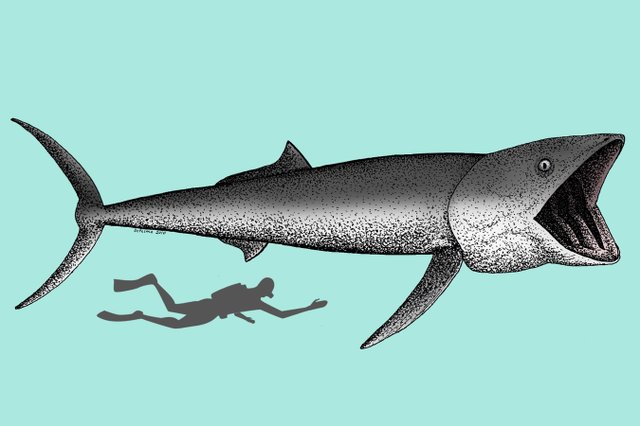
In Britain and the United States, paleontologists found out that large fish lived during the Cretaceous Period and swam through the earth’s seas. These large fish would eat plankton and had filters for this process. These large fish were similar to current humpback and baleen whales. Fossils have been discovered of these fish that have dated back to 145 million years ago. There was a time period between 145 million years ago and 60 million years ago where the fish seemed to be extinct. This weird extinction puzzled scientists until last year when Matt Friedman, a University of Oxford paleontologist discovered a 15 foot long fossil fish. The fish was found in Kansas. It was located in a piece of rock. The fish was similar to the filter feeding, plankton eating fish. It dated back to 75 million years ago, when they were previously thought to be extinct. Friedman says that the fish were a hidden dynasty.
Informatin obtained at www.discovermagazine.com.

Thursday, September 6, 2012

In North Central Chile, near the Fray Jorge National Park, there is mainly desert. This area receives around six inches of rainfall in an entire year. If one travels up the mountain, you will find patches of rainforests in this Pacific Ocean. Some patches of rainforest are as large as 30 acres. There are ferns, mosses, and bromeliads surrounding the canopies of trees that can reach as high as 100 feet. Often, one would think it is raining from the sky in this forest, but in fact it is just water dripping from the top of the tree. These trees take moisture out of fog in the air. In order for these trees to live in such a dry climate, they had to adapt to this way of obtaining fluid. The trees gain 3/4 of their water from this fog. Not only do these trees drink water from the fog, but they eat it too. Many scientists agree that this is a strange but interesting process.
                                                                          
                                                                          Information obtained at www.discovermagazine.com and pictures obtained at www.discovermagazine.com and www.gochile.cl

Monday, September 3, 2012


Twenty years ago, hikers in the Tyrolean Alps glacier located in Italy, found a 5,300 year old body. This was the body of Otiz the Iceman. Recently, researchers have found the mummy's stomach. The body was scanned in 2001. In 2005, Paul Gostner, a retired Italian radiologist noticed that there was an organ near the intestines of the mummy that had not been identified previously. Gostner found out that the unidentified organ was the Iceman's stomach. Due to being on ice for thousands of years, the stomach was very shriveled. It was also transposed with the colon. Otiz has been on an international murder investigation. Genetic tests showed that his stomach had goat meat and grains in it. Until recently, it was believed that the Iceman died hungry and hunted. He had an arrow that struck his left shoulder blade. It is now believed that this Iceman was ambushed not long after his last meal.


Information obtained at www.discovermagazine.com and pictures obtained at www.wikipedia.org and www.archaeology.about.com