Sunday, November 18, 2012


Hans Roy, a geomicrobiologist from Aarhus University in Denmark and his team hauled a chunk of red colored mud from the bottom of the Pacific Ocean. He did not expect any surprises but he got one. Hans and his team embarked upon a month and a half long journey to only study the chemistry of the seafloor. The goal was to determine how much oxygen it absorbs from the water up above. Roy realized that some of the expected oxygen was missing after comparing the predicted levels of oxygen to the new measurements they had pulled up. Roy and his team believe that a hidden population of microbes was living in the mud, breathing in the oxygen. This is a prime example of why we should always expect the unexpected. Life can exist even in the most unexpected. Down at the depths of the seafloor, there are hidden, ancient organisms, just barely alive.
 
 
Information obtained at www.discovermagazine.com and pictures obtained at www.discovermagazine.com and www.scientificamerican.com

Friday, November 16, 2012


When people hear about E.Coli poisoning, many automatically think of it as caused from eating beef. The outbreak traced back to raw spinach is a reminder that the dreadful bacteria can spread through the droppings of animals to the produce growers’ soil, fertilizer, and water. The Microbiologists, Andrew Brabban and Betty Kutter’s goal is to destroy the disgusting bug in the intestines of the livestock; the prime source of the problem. They plan on doing this by using a virus that is a natural enemy of E.Coli. While students were studying E.Coli in sheep at the USDA Food and Feed safety research Unit, researchers at Washington’s Evergreen State College discovered the enemy virus. “Everytime they tried to infect the sheep with E.Coli, the sheep seemed to be within two days perfectly happy and they couldn’t find the bacteria,” says Brabban. “They had some natural resistance.” This is an interesting discovery.

Tuesday, November 13, 2012


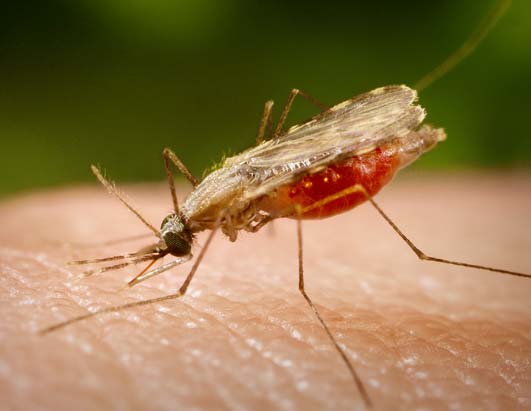
A new weapon against malaria comes from an unexpected place. It actually comes from the guts of a mosquito. George Dimopoulos, a microbiologist from John Hopkins University discovered a class of Enterobacter bacteria that lives inside of certain Zambian mosquitoes. It causes the insect to be resistant to Plasmodium falciparum, which is a parasite that causes malaria. The two microbes were placed into a petri dish. When they squared off, the Plasmodium was prevented from growing. When mosquitos sucked up the parasite along with the bacteria, the disease was not transmitted. Dimopoulos found out that the bacteria prevented the development of Plasmodium by unleashing a torrent of unstable oxygen molecules. Dimopoulos believes that those molecules are either chemical weapons that are normally used against rival bacteria or natural waste products. “The idea is to feed mosquitos in the field with an artificial nectar supplemented with bacterium,” says Dimopoulos. “It would be like a probiotic for the mosquito.” Mosquitos only have to ingest a tiny amount of the Enterobacter bacteria and they will be resistant to malaria. It is possible that the probiotic could be deployed in mass and can be strategically used throughout the tropical world. This can help to stop the mosquitos from spreading the disease to the approximate 250 million people that usually contract the disease ever year.
Information obtained at www.discovermagazine.com Pictures obtained at www.bimcbali.com and www.clarosci.com

Wednesday, November 7, 2012


Don Winget, the astronomer studies stars. His targets however are only about a yard away from him. Winget and his colleagues, for the past two have been creating plasmas that are miniature versions of white dwarf stars at the University of Texas at Austin and Sandia National Laboratory in Albuquerque, New Mexico. White dwarfs are ancient stars that have burned up all of their nuclear fuel. As Winget says, “Astronomy has now become an experimental science.” Once like our sun, white dwarfs are slowly dying embers of stars. These stars collapse into Earth-sized balls that are bound tightly to oxygen and carbon nuclei with an outer layer of hydrogen plasma due to no nuclear fusion to sustain them. Astronomers have a lot to learn about the stars’ plasma exterior, due to the fact that it is the only part directly visible through a telescope. Astronomers also have a lot to learn about these white dwarf stars in general.
 
 
Information obtained at www.discovermagazine.com pictures obtained at www.voanews.com and www.celestiamotherlode.net

Wednesday, October 31, 2012


Recently, scientists are able to rebuild the vocal tracts and record the sounds of ancient creatures, including the mammoths that died out about 14,000 years ago, the now extinct Hawaiian bird, and even our 3 million year old human ancestor named, Lucy (Australopithecus afarensis). The scientists are able to do this by using three-dimensional imaging and a burgeoning knowledge of ancient anatomies. Our ancient ancestor, Lucy stood four feet tall. She swung from tree branches and was able to run on the ground with two feet. “Lucy could not speak the way we do, because she most likely had air sacs, balloon-shaped organs that attach to an extension of the hyoid bone,” says the expert in evolution of speech at Vrije University in Brussels, Bart de Boer. Modern day humans

Lack air sacs but have a bone that supports the tongue muscles. This enables us to have a wide range of vocalizations. “Air sacs make sounds louder and lower-pitched, just the way a musical instrument sounds lower and louder when it’s bigger,” says de Boer. “I was in Brazil recently and heard howler monkeys in the wild. They sounded like scary monsters because of their air sacs.”

Information obtained at www.discovermagazine.com and pictures obtained at www.nationalgeographic.com and www.physorg.com

At the Natick Soldier Center in Massachusetts, John Monroe, A warrior systems integration team leader looks to the future. While thinking of ways for future soldiers to avoid getting killed in a new millennium, Monroe is in the process of developing his vision of what American soldiers might be wearing during combat many years from now. The U.S. Army is preparing to create uniforms with a chest-mounted mouse for weapons and radio control. Monroe’s future warrior concept is projected for 2025. This uniform is far-out engineering. The soldier will have night vision glasses that will correct the distortion caused by the curving visor. The soldier’s helmet called the “headgear subsystem information central” will connect with the suit of the soldier. The helmet will also be linked to the firearm so that the soldier will only have to look at his target. The gun will be voice activated, able to lock on the enemy and fire. The actual suit will be made of a bullet-resistant mesh of carbon nanotubes. The suit will contain embedded enzymes to neutralize chemical or biological weapons. This 2025 suit as of now is more like a dream due to the fact that the technology necessary for this “conceptual simulation” is years off.
 
Information obtained at www.discovermagazine.com and pictures obtained at www.army.mil

Saturday, October 27, 2012


A lady by the name of Perla Lewis-Truong was pregnant. The due date of her baby was March 1st. The day right after thanksgiving, Perla was admitted to the hospital. She suffered with a severe case of preeclampsia. Preeclampsia is a disorder that involves the rapid rising of blood pressure that can put the baby and the mother at a high risk. Doctors had no choice but to deliver the baby by a cesarean section 13 weeks earlier than the expected date. The baby, Celia, came out weighing only a pound and a half. Four months later, she was lying in the Children’s Hospital of the University of California, Davis. The baby then weighed around four pounds. She was still nearly translucent but nonetheless healthy. Luckily for Celia, the hospital she was born in had a neonatal intensive care unit. There are many problems that a premature baby can face. For example, necrotizing enterocolitis is one problem. During this, the intestinal walls deteriorate allowing bacteria to invade. Nearly 25% of babies who are diagnosed with necrotizing enterocolitis die. The survivors, for years will suffer from neurological problems. A neonatologist at U.C. Davis, Mark Underwood seeks better help and treatment for his patients. Unlike most doctors, Underwood focuses his attention on diet rather than drugs. It is believed by Underwood that necrotizing enterocolitis can be prevented by just giving premature babies like Celia a cocktail of probiotics and prebiotics daily. Probiotics are healthy bacteria and prebiotics are the food that those bacteria eat. This is all inspired by human milk, which he considers the “super food.”
 
 
Information obtained at www.discovermagazine.com Pictures obtained at www.whitegadget.com and www.ucdavis.edu

Tuesday, October 23, 2012


Researchers, for generations, have thought of the Amazon as being a cultural desert and a terrain full of jungle that would be a treacherous place to have contained any civilization more sophisticated than a small nomadic tribe. Despite previous assumptions, before the arrival of Europeans, the Amazon may have been much different, inhabiting millions of humans. Recently, archaeologists have found evidence supporting an ancient civilization densely dispersed in settlements throughout the basin. This shows archaeologists that there was probably a much more advanced and larger society than thought previously. Archaeologist, Denise Schaan from the Federal University of Para in Brazil, has found and mapped out clusters of mysterious land sculptures. These sculptures were dug between 700 and 2,000 years ago. Schaan suspects that the 269 circular and rectangular earthworks scattered over a 15,000-square-mile area were ceremonial platforms. “These earthworks could have only have been built by large, coordinated populations,” says Schaan. Bill Denevan, a geographer from The University of Wisconsin estimated that around 9 million people could have lived in the Amazon during the 15th century. Brazilian archaeologist, Helena Lima from The Federal University of Amazonas discovered pottery artifacts in addition to the hundreds of carvings of human faces that date back to 3,000 to 7,000 years ago. This suggests that there were a network of villages that were connected across the Amazon. Another archeologist, Augusto Oyuela-Caycedo of the University of Florida had actually found the remnants of different crops including corn in the northeast are of Peru. This indicates that what is now large swamps was once a grassland managed by the native inhabitants.
Information obtained at www.discovermagazine.com and pictures obtained at www.discovermagazine.com and www.wikipedia.org

Wednesday, October 17, 2012


At Australian National University, researcher, Sue O’Connor started a search at an area where colonizers who were from Asia are believed to have landed. This area is an island of the coast of Australia. Since O’Connor had already found early fishing technology from this area, she thought that the cave which local hunters led her to might have given shelter to ancient fisherman. A team of farmers were hired by O’Connor to find out if her wonderings were in fact true. 10,000 pieces of bone, shell, and stone were found a month later. It was not possible for the team to know what the pieces contained inside. The deep and old sediment layers had hardened. Chunks containing artifacts studded the surface. O’Connor brought out many fish bones when she brought the slabs into her lab and used acetic acid to treat them. Many of the older bones were from sharks, tuna, and many other types of fish. The fish bones dated back to 42,000 years ago! These fish are thought to have been brought to the cave without any boats or fancy equipment.

Information obtained at www.discovermagazine.com Pictures obtained at www.xyberlog.com and www.deseretnews.com  

Monday, October 15, 2012


What do you think of when you hear the word desert? Many people think that they are just a boring place full of sand. Deserts are actually quite interesting. There are a few facts that most people probably don’t know about deserts. If one views earth from space, it appears to look just like a blue marble full of water. Most people don’t realize that one-third of the earth’s land is totally or partial covered by desert. Many people don’t think that Antarctica is a desert, but it is in fact the largest one! Not all deserts have to be hot. The only qualification is that the region loses more moisture than it gains. The Atacama Desert in Chile contains areas where no amount of rain has ever been recorded. It is thought by many scientists that portions of these areas have been sustained in extreme desert mode for about 40 million years! That is longer than any other region in the world.

Information obtained at www.discovermagazine.com Pictures obtained at www.zmescience.com and www.es-static.us

Monday, October 8, 2012


Paleobiologist, Alex Wolfe from the University of Alberta thought that he had seen a hair in piece of 80 million year old amber. When he viewed this tiny strand in a microscope, it revealed to him a ringed, sheen appearance. Wolfe soon realized that with these characteristics, it had to be a feather. Wolfe, along with his colleagues, searched through 150,000 little pieces of amber that were found in Alberta, Canada. The amber was found in rocks rich with fossils. Out of their searches, they discovered 11 feathers from the late Cretaceous period. The fossils even captured the 3D structure and still had the old pigments. The feathers represent the whole spectrum of evolution for these feathers. The feathers vary from simple strands to the structures that were adapted for flying and for them to dive. Those feathers that were adapted for flying are more complex. Wolfe and his colleagues believe that these feathers came from ancient birds.

Information obtained at www.discovermagazine.com
Pictures obtained at www.blogspot.com and www.cosmosmagazine.com


Last march, the U.S. Navy submarine, USS Connecticut broke through three feet of ice in the Arctic 200 miles north of Prudhoe Bay, Alaska. This area is where the Applied Physics Lab (APL) from the University of Washington for the U.S. Navy, conducts underwater communications and sonar experiments. Since the ice is jagged on its undersides, it is hard to locate subs due to it distorting the sonar tracking. Because of this, APL, every spring sends researchers out in the – 30 degree weather to test the Deep Siren along with other devices. The Deep Siren sends acoustics and satellite messages through over 100 miles worth of water. These experiments that usually take a week help also by increasing our navy’s visibility in the arctic area. APL field engineer, Keith Magness explains that The Arctic is governed by international agreements. He says, “now that the ice is retreating, it’s getting a lot more interesting.” “Countries are trying to expand their coastline to claim resource, and it is one way our Navy maintains its presence.”  
Information obtained at www.discovermagazine.com and pictures obtained at www.discovermagazine.com and www.wikimedia.org

Thursday, October 4, 2012


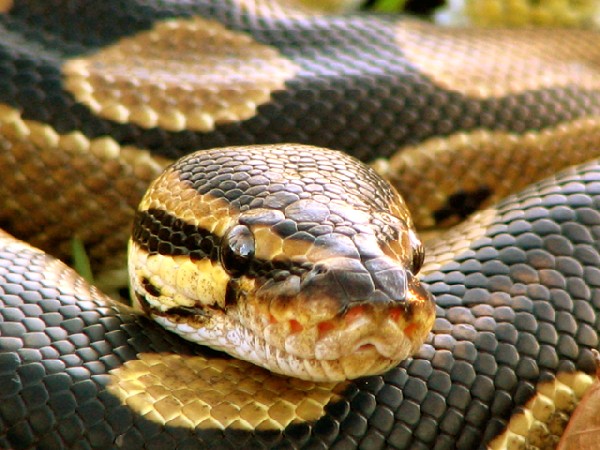
Leslie Leinward, a molecular biologist at the University of Colorado at Boulder, had a weird obsession with pythons. Her coworkers gave her strange looks when she announced her new found interest in the slithering snakes. Leinward also had an interest in the roots of heart disease. She realized that despite the fact that snakes eat large amounts of fat, their hearts stay strong and lean. It wasn’t certain that any snake biology would transfer to human biology due to the fact that for the most part, they are not very similar. Her research eventually paid off six years. It was found that the blood from a python contains molecules that rapidly strengthen the heart muscle and bulk it up.  Congestive heart failure, a chronic condition that has affected 5.7 million Americans is when the heart becomes too weak and blood isn’t pumping efficiently. The new snake discovery might make a good approach to this along with other cardiovascular diseases. Leinwand says that the main idea would be for everyone to have a big, muscular heart like that of an elite athlete. Unfortunately, many people develop the wrong kind of big heart. Their heart becomes enlarged from obesity and high blood pressure.  The heart has so much stress that the heart stretches out to make up for it. It gets larger but does not work as effectively. This can increase risk for heart attacks or the buildup of fat.
Information obtained at www.discovermagazine.com Pictures obtained at www.kingsnake.com and www.easterndrugs.com

Monday, October 1, 2012


The Vasa, a Swedish ship which sank in Stockholm harbor in 1628 was raised up from the Baltic Sea around 300 years after it sank. It was in excellent condition considering the circumstances. History seems to remain intact on the bottom of the Baltic Sea. Shipworms don’t usually meddle with shipwrecks in this cold, low-salt area. The well preserved ships might be changing soon due to global warming. The ranges of shipworms are starting to spread to these areas and may affect over 100,000 thousand shipwrecks that reside there. Shipworms are actually not worms but saltwater clams that overtime can devour wood structures including docks, piers, and ships. The worm/clams inhabit the waters around Sweden near the Western Coast. There is practically nothing left of the shipwrecks in these areas. Shipworms are big fans of warm waters. This has scientist wondering if the Baltic Sea is heating up due to Global Warming. 

Wednesday, September 26, 2012


Many think that half the battle is knowing your enemy. If so, a group of scientists believe that they may be able to eventually defeat the common cold. In April, there was a paper published the about the 100 strains of rhinovirus RNA structures. The RNA is all of the main causes of the most renowned common colds. The areas of the genome that are across most strains were found by Pulmonologist Stephen Liggett and his team, from the University of Maryland. The team said that these targets may be a good target for drugs to be tested on.  Scientists aren’t sure if only certain types of Rhinovirus are responsible for the sparking asthma and intensifying wheezing and such. Liggett explains that there are so many different types of Rhinovirus so just saying that it is just Rhinovirus is very broad. 3,000 are being sequenced by Liggett’s team from a handful of patients at the University of Wisconsin at Madison.
Information obtained at www.discovermagazine.com. Pictures obtained at www.wadsworth.org and www.wikipedia.org

Tuesday, September 25, 2012


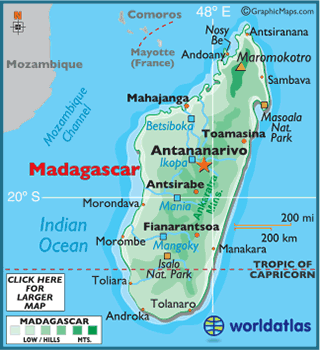
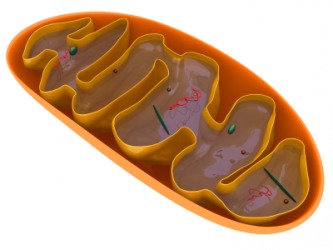
A ship was set off course by a storm in A.D. 830. The ship was an Indonesian ship. It landed on what is now called Madagascar.  Madagascar is an island located off the coast Southeast of Africa. The people on this ship were around 3,000 miles from their home. Around twelve survivors landed at this location from the ship. A computational biologist, Murray Cox, from Massey University in New Zealand says that this event from many years ago could have marked the origins of the first settlements that house 22 million individuals. It has been suggested that the Malagasy natives on the island are mostly from Indonesian descent. Cox explains that the DNA patterns are evident in Madagascar today.  He explains that 30 percent of the native women have the same mitochondrial DNA. This DNA is the kind passed from mother to child. This shows us that there is less diversity than in an average population. Most typical populations show less than two percent. This evidence suggests a big recent growth from a small population of founders.       Information obtained at www.discovermagizine.com and picture were pbtained from www.nocookie.com and www.worldatlas.com

Thursday, September 20, 2012


In the mitochondrial DNA of Drosophila, it has been discovered that different mutations can cause the lifespan of men to be affected. The mutations to not have the same result on the lifespan of women however. In the United Kingdom, by the age of 85, there are around 50 percent more women than men in the population. By the age of 100, there are twice more than that. This does not only take place in humans but in most other animals too. Colleagues at Monash University, located in Australia, found out that the mitochondria contain mutations that affect the aging of male aging but not female aging. This is because the mitochondria are passed from the mother. Mutations that harm males can build in the mitochondria DNA. This mutation slips through natural selection. Of course the main reasons women outlive men is due to social behavior, lifestyle, and hormones. We do see the difference in male mitochondria from females and it plays a small role nonetheless.
www.the-scientist.com was where my information was obtained from and my pictures were from www.harrycutting.com and www.yourdictionary.com

Tuesday, September 18, 2012


Kepler 22b was discovered last December by astronomers. Kepler 22b is a new planet located 620 light years away. The planet was the first to be in its star’s habitable area. It was the first planet ever discovered by the NASA kepler space telescope. The star’s habitable zone is a region that can contain water. We all are aware that water is a key component for life on earth. The Keplar telescope has discovered over 2,300 other planets that circle around other stars. Unfortunately, the Keplar is not capable of telling us information we want to know about the planets that is discovers. It can’t tell us if oxygen is present in the atmosphere, if the planet is rocky, or if it contains any type of water on its surface. When planets out of our solar system started being discovered in the mid-1990s, engineers of NASA wanted missions that could potentially answer these questions. One main one was called the Terrestrial Planet Finder. This was a 1 billion dollar telescope. It could determine the composition of the planet’s atmosphere by capturing the planet’s light
Information obtained at www.discovermagazine.com and pictures obtained at www.wikipedia.org and www.exep.jpl.nasa.gov

Wednesday, September 12, 2012


Recently, 118 gerbils that had total deafness in one ear were treated by British scientists from The University of Sheffield. Marcelo Rivolta headed this experiment. Using human embryonic stem cells, the teams of scientists were able to improve the hearing of the gerbils by 46 percent. This was able to be recorded by electrical signals in the animals' brains. "If this was a human patient, it would mean going from being so deaf as to be unable to hear a lorry or truck on the street to being able to maintain a conversation," Rivolta told reporters. Gerbil hearing range is very similar to that of humans so that’s why they were chosen for this experiment. Rivolta also said stem-cell treatment would initially address nerve damage, although it could also be used in a wider range of patients if it was used in combination with implants. Doctors hope one day to use stem cells to treat a wide range of diseases such as Parkinson's, diabetes and cancer. Hopes are that eventually also this study can lead to helping people with an intractable form of deafness caused by nerve damage. This is a great start towards a bright advance.                  
Information obtained at www.dailynews.com. Pictures obtained at www.unusualpets.org and www.prometheism.org.

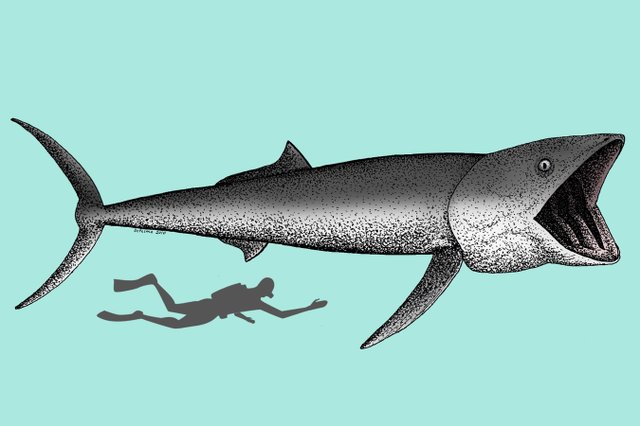
In Britain and the United States, paleontologists found out that large fish lived during the Cretaceous Period and swam through the earth’s seas. These large fish would eat plankton and had filters for this process. These large fish were similar to current humpback and baleen whales. Fossils have been discovered of these fish that have dated back to 145 million years ago. There was a time period between 145 million years ago and 60 million years ago where the fish seemed to be extinct. This weird extinction puzzled scientists until last year when Matt Friedman, a University of Oxford paleontologist discovered a 15 foot long fossil fish. The fish was found in Kansas. It was located in a piece of rock. The fish was similar to the filter feeding, plankton eating fish. It dated back to 75 million years ago, when they were previously thought to be extinct. Friedman says that the fish were a hidden dynasty.
Informatin obtained at www.discovermagazine.com.

Thursday, September 6, 2012

In North Central Chile, near the Fray Jorge National Park, there is mainly desert. This area receives around six inches of rainfall in an entire year. If one travels up the mountain, you will find patches of rainforests in this Pacific Ocean. Some patches of rainforest are as large as 30 acres. There are ferns, mosses, and bromeliads surrounding the canopies of trees that can reach as high as 100 feet. Often, one would think it is raining from the sky in this forest, but in fact it is just water dripping from the top of the tree. These trees take moisture out of fog in the air. In order for these trees to live in such a dry climate, they had to adapt to this way of obtaining fluid. The trees gain 3/4 of their water from this fog. Not only do these trees drink water from the fog, but they eat it too. Many scientists agree that this is a strange but interesting process.
                                                                          
                                                                          Information obtained at www.discovermagazine.com and pictures obtained at www.discovermagazine.com and www.gochile.cl

Monday, September 3, 2012


Twenty years ago, hikers in the Tyrolean Alps glacier located in Italy, found a 5,300 year old body. This was the body of Otiz the Iceman. Recently, researchers have found the mummy's stomach. The body was scanned in 2001. In 2005, Paul Gostner, a retired Italian radiologist noticed that there was an organ near the intestines of the mummy that had not been identified previously. Gostner found out that the unidentified organ was the Iceman's stomach. Due to being on ice for thousands of years, the stomach was very shriveled. It was also transposed with the colon. Otiz has been on an international murder investigation. Genetic tests showed that his stomach had goat meat and grains in it. Until recently, it was believed that the Iceman died hungry and hunted. He had an arrow that struck his left shoulder blade. It is now believed that this Iceman was ambushed not long after his last meal.


Information obtained at www.discovermagazine.com and pictures obtained at www.wikipedia.org and www.archaeology.about.com

Thursday, August 30, 2012


FASEB Journal has recently suggested to us that there is a specific enzyme by the name of 5 lipoxgenase that might be helpful when inhibited to help lessen or maybe even put a halt to some of the harmful immune issues of astronauts. These issues are a result of flight in space. Many problems caused by spaceflight are similar to the process of aging for humans here on earth. It is thought that 5 lipoxgenase may also help the immune system of the elderly. Ph.D, Mauro Maccarrone and some of his colleagues conducted an experiment to gather this new information. They took the blood from donors that were completely healthy. Thelymphocytes from each donor were isolated. One group of lymphocytes was put onboard the International Space System and into a centrifuge. It had a space-like environment but an earth-like gravitational force. The other group was put onboard the ISS as well but also exposed to microgravity. The lymphocytes in the earth gravity were basically normal; however, the ones exposed to the microgravity were above "normal." It is believed that the reason for these results is because of the levels of this enzyme.


Information was obtained from www.biologynews.net
and pictures were obtained from www.ozonesolutions.com and www.zmescience.com

Wednesday, August 29, 2012


Researchers from the British Medical Journal say that swimming with dolphins can work pretty well as a treatment for depression. The theory of biophilia is supported by this research. Biophilia shows us how a human relationship with the environment is important. The human is dependent on this. Thirty patients in Honduras that had a mild to moderate depression were used in this research, with half serving as the control group, and the other half as the experimental group. Those in the experimental group swam with dolphins every day for an hour over a two week time frame. All of the people in the control group did all of the same water activities that the experimental group participated in, only the dolphins were not present. During the experiment, both groups were not allowed to use any drugs or medications to treat the depression. The depression of each individual taking part in this experiment was measured before and after the two weeks. On average, the experimental group had a decrease of depression symptoms after the two weeks more so than the control group. It turns out that the cute sea critters are healers.

Information obtained at www.biologynews.net                                pictures obtained at    www.angelreikihealing.com and www.wikipedia.org