Wednesday, October 31, 2012


Recently, scientists are able to rebuild the vocal tracts and record the sounds of ancient creatures, including the mammoths that died out about 14,000 years ago, the now extinct Hawaiian bird, and even our 3 million year old human ancestor named, Lucy (Australopithecus afarensis). The scientists are able to do this by using three-dimensional imaging and a burgeoning knowledge of ancient anatomies. Our ancient ancestor, Lucy stood four feet tall. She swung from tree branches and was able to run on the ground with two feet. “Lucy could not speak the way we do, because she most likely had air sacs, balloon-shaped organs that attach to an extension of the hyoid bone,” says the expert in evolution of speech at Vrije University in Brussels, Bart de Boer. Modern day humans

Lack air sacs but have a bone that supports the tongue muscles. This enables us to have a wide range of vocalizations. “Air sacs make sounds louder and lower-pitched, just the way a musical instrument sounds lower and louder when it’s bigger,” says de Boer. “I was in Brazil recently and heard howler monkeys in the wild. They sounded like scary monsters because of their air sacs.”

Information obtained at www.discovermagazine.com and pictures obtained at www.nationalgeographic.com and www.physorg.com

At the Natick Soldier Center in Massachusetts, John Monroe, A warrior systems integration team leader looks to the future. While thinking of ways for future soldiers to avoid getting killed in a new millennium, Monroe is in the process of developing his vision of what American soldiers might be wearing during combat many years from now. The U.S. Army is preparing to create uniforms with a chest-mounted mouse for weapons and radio control. Monroe’s future warrior concept is projected for 2025. This uniform is far-out engineering. The soldier will have night vision glasses that will correct the distortion caused by the curving visor. The soldier’s helmet called the “headgear subsystem information central” will connect with the suit of the soldier. The helmet will also be linked to the firearm so that the soldier will only have to look at his target. The gun will be voice activated, able to lock on the enemy and fire. The actual suit will be made of a bullet-resistant mesh of carbon nanotubes. The suit will contain embedded enzymes to neutralize chemical or biological weapons. This 2025 suit as of now is more like a dream due to the fact that the technology necessary for this “conceptual simulation” is years off.
 
Information obtained at www.discovermagazine.com and pictures obtained at www.army.mil

Saturday, October 27, 2012


A lady by the name of Perla Lewis-Truong was pregnant. The due date of her baby was March 1st. The day right after thanksgiving, Perla was admitted to the hospital. She suffered with a severe case of preeclampsia. Preeclampsia is a disorder that involves the rapid rising of blood pressure that can put the baby and the mother at a high risk. Doctors had no choice but to deliver the baby by a cesarean section 13 weeks earlier than the expected date. The baby, Celia, came out weighing only a pound and a half. Four months later, she was lying in the Children’s Hospital of the University of California, Davis. The baby then weighed around four pounds. She was still nearly translucent but nonetheless healthy. Luckily for Celia, the hospital she was born in had a neonatal intensive care unit. There are many problems that a premature baby can face. For example, necrotizing enterocolitis is one problem. During this, the intestinal walls deteriorate allowing bacteria to invade. Nearly 25% of babies who are diagnosed with necrotizing enterocolitis die. The survivors, for years will suffer from neurological problems. A neonatologist at U.C. Davis, Mark Underwood seeks better help and treatment for his patients. Unlike most doctors, Underwood focuses his attention on diet rather than drugs. It is believed by Underwood that necrotizing enterocolitis can be prevented by just giving premature babies like Celia a cocktail of probiotics and prebiotics daily. Probiotics are healthy bacteria and prebiotics are the food that those bacteria eat. This is all inspired by human milk, which he considers the “super food.”
 
 
Information obtained at www.discovermagazine.com Pictures obtained at www.whitegadget.com and www.ucdavis.edu

Tuesday, October 23, 2012


Researchers, for generations, have thought of the Amazon as being a cultural desert and a terrain full of jungle that would be a treacherous place to have contained any civilization more sophisticated than a small nomadic tribe. Despite previous assumptions, before the arrival of Europeans, the Amazon may have been much different, inhabiting millions of humans. Recently, archaeologists have found evidence supporting an ancient civilization densely dispersed in settlements throughout the basin. This shows archaeologists that there was probably a much more advanced and larger society than thought previously. Archaeologist, Denise Schaan from the Federal University of Para in Brazil, has found and mapped out clusters of mysterious land sculptures. These sculptures were dug between 700 and 2,000 years ago. Schaan suspects that the 269 circular and rectangular earthworks scattered over a 15,000-square-mile area were ceremonial platforms. “These earthworks could have only have been built by large, coordinated populations,” says Schaan. Bill Denevan, a geographer from The University of Wisconsin estimated that around 9 million people could have lived in the Amazon during the 15th century. Brazilian archaeologist, Helena Lima from The Federal University of Amazonas discovered pottery artifacts in addition to the hundreds of carvings of human faces that date back to 3,000 to 7,000 years ago. This suggests that there were a network of villages that were connected across the Amazon. Another archeologist, Augusto Oyuela-Caycedo of the University of Florida had actually found the remnants of different crops including corn in the northeast are of Peru. This indicates that what is now large swamps was once a grassland managed by the native inhabitants.
Information obtained at www.discovermagazine.com and pictures obtained at www.discovermagazine.com and www.wikipedia.org

Wednesday, October 17, 2012


At Australian National University, researcher, Sue O’Connor started a search at an area where colonizers who were from Asia are believed to have landed. This area is an island of the coast of Australia. Since O’Connor had already found early fishing technology from this area, she thought that the cave which local hunters led her to might have given shelter to ancient fisherman. A team of farmers were hired by O’Connor to find out if her wonderings were in fact true. 10,000 pieces of bone, shell, and stone were found a month later. It was not possible for the team to know what the pieces contained inside. The deep and old sediment layers had hardened. Chunks containing artifacts studded the surface. O’Connor brought out many fish bones when she brought the slabs into her lab and used acetic acid to treat them. Many of the older bones were from sharks, tuna, and many other types of fish. The fish bones dated back to 42,000 years ago! These fish are thought to have been brought to the cave without any boats or fancy equipment.

Information obtained at www.discovermagazine.com Pictures obtained at www.xyberlog.com and www.deseretnews.com  

Monday, October 15, 2012


What do you think of when you hear the word desert? Many people think that they are just a boring place full of sand. Deserts are actually quite interesting. There are a few facts that most people probably don’t know about deserts. If one views earth from space, it appears to look just like a blue marble full of water. Most people don’t realize that one-third of the earth’s land is totally or partial covered by desert. Many people don’t think that Antarctica is a desert, but it is in fact the largest one! Not all deserts have to be hot. The only qualification is that the region loses more moisture than it gains. The Atacama Desert in Chile contains areas where no amount of rain has ever been recorded. It is thought by many scientists that portions of these areas have been sustained in extreme desert mode for about 40 million years! That is longer than any other region in the world.

Information obtained at www.discovermagazine.com Pictures obtained at www.zmescience.com and www.es-static.us

Monday, October 8, 2012


Paleobiologist, Alex Wolfe from the University of Alberta thought that he had seen a hair in piece of 80 million year old amber. When he viewed this tiny strand in a microscope, it revealed to him a ringed, sheen appearance. Wolfe soon realized that with these characteristics, it had to be a feather. Wolfe, along with his colleagues, searched through 150,000 little pieces of amber that were found in Alberta, Canada. The amber was found in rocks rich with fossils. Out of their searches, they discovered 11 feathers from the late Cretaceous period. The fossils even captured the 3D structure and still had the old pigments. The feathers represent the whole spectrum of evolution for these feathers. The feathers vary from simple strands to the structures that were adapted for flying and for them to dive. Those feathers that were adapted for flying are more complex. Wolfe and his colleagues believe that these feathers came from ancient birds.

Information obtained at www.discovermagazine.com
Pictures obtained at www.blogspot.com and www.cosmosmagazine.com


Last march, the U.S. Navy submarine, USS Connecticut broke through three feet of ice in the Arctic 200 miles north of Prudhoe Bay, Alaska. This area is where the Applied Physics Lab (APL) from the University of Washington for the U.S. Navy, conducts underwater communications and sonar experiments. Since the ice is jagged on its undersides, it is hard to locate subs due to it distorting the sonar tracking. Because of this, APL, every spring sends researchers out in the – 30 degree weather to test the Deep Siren along with other devices. The Deep Siren sends acoustics and satellite messages through over 100 miles worth of water. These experiments that usually take a week help also by increasing our navy’s visibility in the arctic area. APL field engineer, Keith Magness explains that The Arctic is governed by international agreements. He says, “now that the ice is retreating, it’s getting a lot more interesting.” “Countries are trying to expand their coastline to claim resource, and it is one way our Navy maintains its presence.”  
Information obtained at www.discovermagazine.com and pictures obtained at www.discovermagazine.com and www.wikimedia.org

Thursday, October 4, 2012


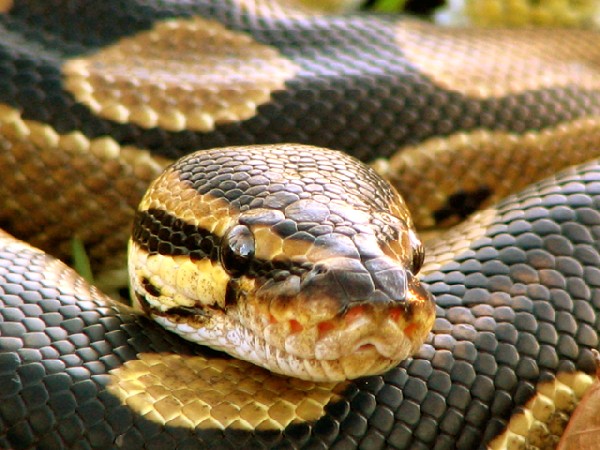
Leslie Leinward, a molecular biologist at the University of Colorado at Boulder, had a weird obsession with pythons. Her coworkers gave her strange looks when she announced her new found interest in the slithering snakes. Leinward also had an interest in the roots of heart disease. She realized that despite the fact that snakes eat large amounts of fat, their hearts stay strong and lean. It wasn’t certain that any snake biology would transfer to human biology due to the fact that for the most part, they are not very similar. Her research eventually paid off six years. It was found that the blood from a python contains molecules that rapidly strengthen the heart muscle and bulk it up.  Congestive heart failure, a chronic condition that has affected 5.7 million Americans is when the heart becomes too weak and blood isn’t pumping efficiently. The new snake discovery might make a good approach to this along with other cardiovascular diseases. Leinwand says that the main idea would be for everyone to have a big, muscular heart like that of an elite athlete. Unfortunately, many people develop the wrong kind of big heart. Their heart becomes enlarged from obesity and high blood pressure.  The heart has so much stress that the heart stretches out to make up for it. It gets larger but does not work as effectively. This can increase risk for heart attacks or the buildup of fat.
Information obtained at www.discovermagazine.com Pictures obtained at www.kingsnake.com and www.easterndrugs.com

Monday, October 1, 2012


The Vasa, a Swedish ship which sank in Stockholm harbor in 1628 was raised up from the Baltic Sea around 300 years after it sank. It was in excellent condition considering the circumstances. History seems to remain intact on the bottom of the Baltic Sea. Shipworms don’t usually meddle with shipwrecks in this cold, low-salt area. The well preserved ships might be changing soon due to global warming. The ranges of shipworms are starting to spread to these areas and may affect over 100,000 thousand shipwrecks that reside there. Shipworms are actually not worms but saltwater clams that overtime can devour wood structures including docks, piers, and ships. The worm/clams inhabit the waters around Sweden near the Western Coast. There is practically nothing left of the shipwrecks in these areas. Shipworms are big fans of warm waters. This has scientist wondering if the Baltic Sea is heating up due to Global Warming.