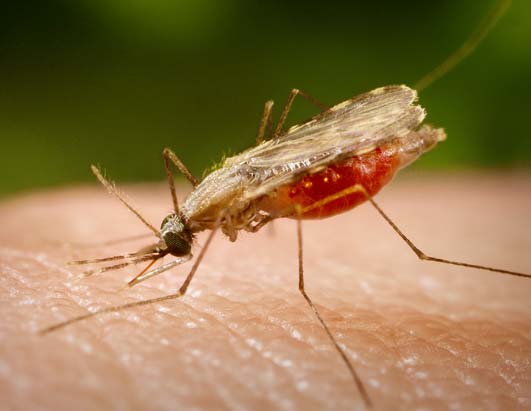
 A new weapon against malaria comes from an
unexpected place. It actually comes from the guts of a mosquito. George
Dimopoulos, a microbiologist from John Hopkins University discovered a class of
Enterobacter bacteria that lives
inside of certain Zambian mosquitoes. It causes the insect to be resistant to Plasmodium falciparum, which is a
parasite that causes malaria. The two microbes were placed into a petri dish.
When they squared off, the Plasmodium was
prevented from growing. When mosquitos sucked up the parasite along with the
bacteria, the disease was not transmitted. Dimopoulos found out that the
bacteria prevented the development of Plasmodium
by unleashing a torrent of unstable oxygen molecules. Dimopoulos believes
that those molecules are either chemical weapons that are normally used against
rival bacteria or natural waste products. “The idea is to feed mosquitos in the
field with an artificial nectar supplemented with bacterium,” says Dimopoulos. “It
would be like a probiotic for the mosquito.” Mosquitos only have to ingest a
tiny amount of the Enterobacter bacteria and they will be resistant to malaria.
It is possible that the probiotic could be deployed in mass and can be
strategically used throughout the tropical world. This can help to stop the
mosquitos from spreading the disease to the approximate 250 million people that
usually contract the disease ever year.
A new weapon against malaria comes from an
unexpected place. It actually comes from the guts of a mosquito. George
Dimopoulos, a microbiologist from John Hopkins University discovered a class of
Enterobacter bacteria that lives
inside of certain Zambian mosquitoes. It causes the insect to be resistant to Plasmodium falciparum, which is a
parasite that causes malaria. The two microbes were placed into a petri dish.
When they squared off, the Plasmodium was
prevented from growing. When mosquitos sucked up the parasite along with the
bacteria, the disease was not transmitted. Dimopoulos found out that the
bacteria prevented the development of Plasmodium
by unleashing a torrent of unstable oxygen molecules. Dimopoulos believes
that those molecules are either chemical weapons that are normally used against
rival bacteria or natural waste products. “The idea is to feed mosquitos in the
field with an artificial nectar supplemented with bacterium,” says Dimopoulos. “It
would be like a probiotic for the mosquito.” Mosquitos only have to ingest a
tiny amount of the Enterobacter bacteria and they will be resistant to malaria.
It is possible that the probiotic could be deployed in mass and can be
strategically used throughout the tropical world. This can help to stop the
mosquitos from spreading the disease to the approximate 250 million people that
usually contract the disease ever year.
Information obtained at www.discovermagazine.com Pictures obtained at www.bimcbali.com and www.clarosci.com

No comments:
Post a Comment